Delaware County Dog Registration Information
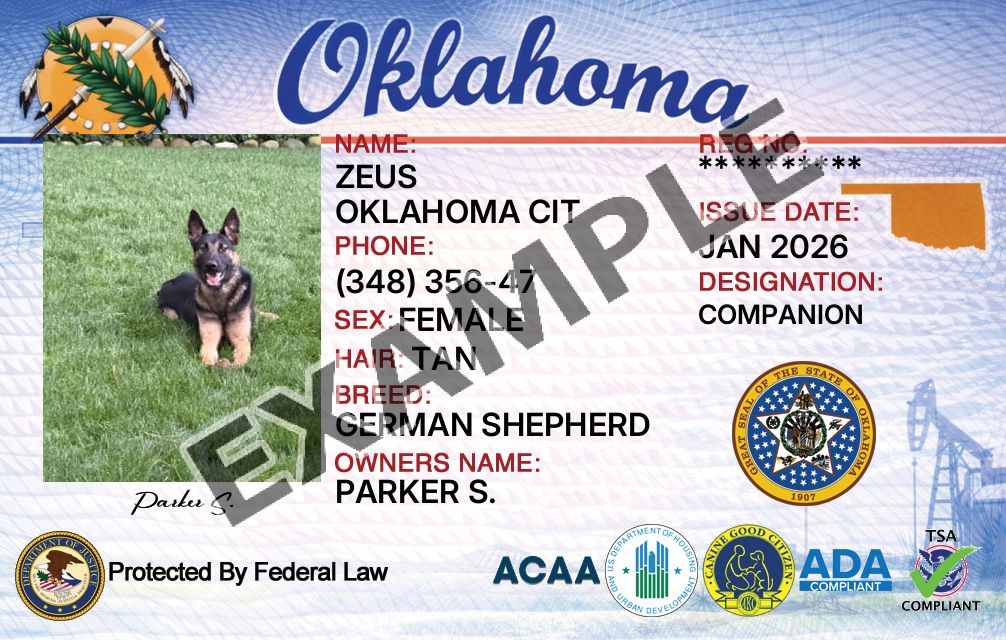
Service Dogs and Emotional Support Animals in Delaware, Oklahoma
If you’re searching where do I register my dog in Delaware County, Oklahoma for my service dog or emotional support dog, the most important thing to know is that “registration” can mean different things. In most cases, residents are really asking about (1) a dog license in Delaware County, Oklahoma (when a city requires it), and/or (2) rabies vaccination and local animal control compliance. Separately, a dog’s service dog status is a legal accommodation under disability law—not a county-issued license—and an emotional support animal (ESA) is generally a housing-related designation, not a public-access credential.
Where to Register or License Your Dog in Delaware County, Oklahoma
Because licensing and ordinance enforcement are often local, start with the office that matches where you live in Delaware County (city limits vs. unincorporated areas). Below are several official offices residents commonly contact for dog licensing, animal control, impoundment, or rabies/bite-related guidance. If you’re unsure, call the closest city’s animal control first; they can tell you whether your address is within their jurisdiction.
Example official offices to contact (Delaware County, OK)
| Office | Address | Phone | Hours | |
|---|---|---|---|---|
| Grove Animal Control Shelter (City of Grove) |
130 E O'Daniel Parkway Grove, OK 74344 |
918-786-6967 918-786-6121 |
Not listed | Not listed |
| Delaware County Sheriff's Office |
322 S 5th St Jay, OK 74346 |
918-253-2700 | bynumj@delcosheriff.org | 8:00 - 4:30 |
| Delaware County Health Department (Oklahoma State Department of Health) |
438 S 9th St Jay, OK 74346-0370 |
877-253-4511 | Not listed | Not listed |
| Delaware County Courthouse (general county offices directory) |
327 S 5th Street Jay, OK 74346 |
Not listed (varies by office) | Not listed (varies by office) | Not listed (varies by office) |
| City of Jay Animal Services (City of Jay) | Not listed | Not listed | Not listed | Not listed |
Overview of Dog Licensing in Delaware County, Oklahoma
Is there one countywide dog license?
In many Oklahoma counties, there is not a single, uniform “county dog license” office for every resident. Instead, dog licensing is commonly tied to municipal ordinances (city rules) and is enforced locally through city animal control or law enforcement. That’s why the best first step is to determine whether you live within city limits (such as Grove or Jay) or in an unincorporated area of Delaware County.
What “registration” usually means
When people ask about an animal control dog license Delaware County, Oklahoma, they’re usually referring to one or more of the following:
- Dog license/tag (city-issued, if required): A local registration that may require proof of rabies vaccination and a fee.
- Rabies vaccination compliance: Keeping your dog currently vaccinated against rabies, which is critical for public health and often required by local rules.
- Animal control records: Impoundment, bite reports, dangerous dog investigations, or quarantine/observation instructions after a bite.
How Dog Licensing Works Locally in Delaware County, Oklahoma
Step 1: Identify your jurisdiction (city vs. county area)
To find where to register a dog in Delaware County, Oklahoma, start by answering one question: Do you live inside a city limit?
- If you live inside a city limit: The city’s animal control/animal services (or sometimes the city police department) typically administers licensing requirements and local pet ordinances.
- If you live in an unincorporated area: There may be fewer formal “license tag” requirements, but you still must comply with rabies vaccination expectations and any applicable county/state laws. For enforcement issues (e.g., aggressive dogs at large), residents may be directed to the appropriate law enforcement or animal control resource for their area.
Step 2: Prepare the documents animal control usually requests
While the exact requirements can vary by jurisdiction, licensing offices and animal control commonly ask for:
- Proof of rabies vaccination (a rabies certificate from a veterinarian)
- Owner identification (a driver’s license or other ID)
- Proof of residency (especially if the fee differs by resident status)
- Licensing fee (amount and payment types vary by city/office)
Step 3: Understand how rabies rules affect licensing and enforcement
Even when a city doesn’t heavily promote “dog licensing,” rabies vaccination is the key compliance item that comes up during: animal bites, quarantine/observation decisions, “dog at large” incidents, and reclaiming an impounded dog. If your dog bites someone, public health guidance may require a 10-day observation period for dogs, cats, and ferrets, and local authorities may coordinate next steps.
Common scenarios and who to call
You need a license tag or local “pet registration”
Start with your city animal control/animal services (for example, the City of Grove Animal Control Shelter if you live in Grove). Ask specifically: “Do you require a dog license tag, and where do I purchase it?”
A bite occurred or you need rabies guidance
Contact local animal control (if inside city limits) and/or the Delaware County Health Department for public health direction. If the situation is urgent or safety-related, contact appropriate emergency services.
Aggressive dog at large / enforcement concern
Inside city limits: call the city animal control/animal services. Outside city limits (or if you can’t identify jurisdiction): call the Delaware County Sheriff’s Office to route the complaint appropriately.
You’re registering a service dog or ESA
You generally do not register a service dog or emotional support animal with the county. Instead, you handle (a) any local dog license/rabies requirements and (b) the separate legal rules that apply to service dogs or ESAs (explained below).
This distinction is the biggest reason people get stuck when searching where do I register my dog in Delaware County, Oklahoma for my service dog or emotional support dog: local licensing and rabies compliance are about public health and local ordinances, while service-dog and ESA rules come from disability and housing laws.
Service Dog Laws in Delaware County, Oklahoma
A service dog is not “licensed” as a service dog by the county
A service dog is generally defined by what the dog does: it is trained to perform tasks for a person with a disability. That legal status does not usually come from a county-issued service-dog license. Instead, you comply with the same local rules as any other dog owner—like rabies vaccination and any required dog license in Delaware County, Oklahoma where you live—while also being protected by laws that allow a trained service dog to accompany its handler in public places where pets aren’t allowed.
What you can be asked in public (practical overview)
In many public-access situations, staff may be limited to asking:
- Whether the dog is required because of a disability
- What work or tasks the dog has been trained to perform
Even with public-access rights, a service dog must be under control and housebroken. Local agencies can still enforce laws related to dangerous dogs, bites, and running at large.
Service dogs still need rabies vaccination and may need a local license
Having a service dog does not remove basic public health requirements. If your city requires a license tag, you still obtain it through the local licensing office/animal control process. This is why the best answer to “service dog registration” is often: get the normal license (if your city requires it) and keep rabies current.
Emotional Support Animal Rules in Delaware County, Oklahoma
An ESA is not the same as a service dog
An emotional support animal (ESA) provides comfort by its presence, but it is not necessarily trained to perform specific tasks related to a disability. Because of that, ESAs generally do not have the same public-access rights as service dogs. An ESA may be relevant primarily in housing contexts, where certain rules can require reasonable accommodations.
ESA “registration” websites are not required for legal status
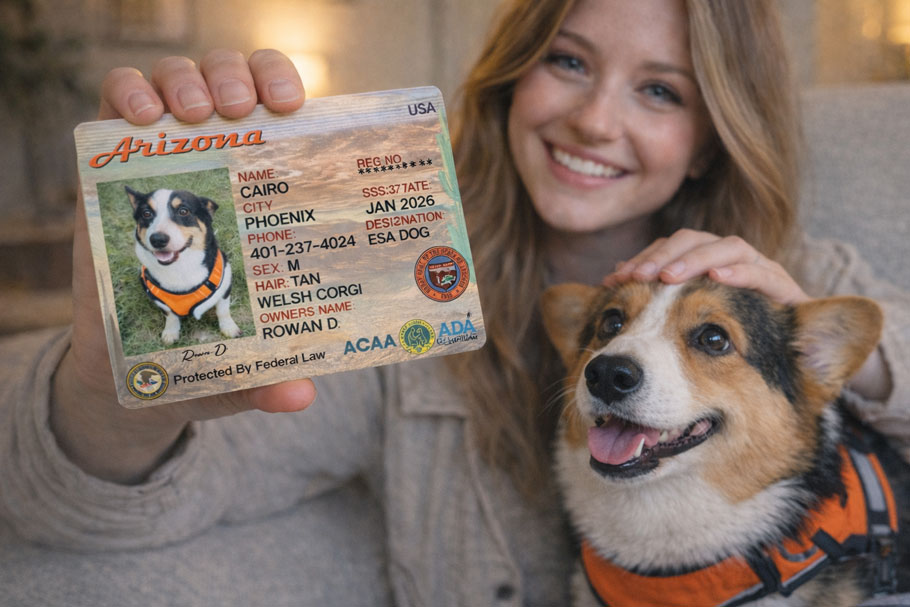
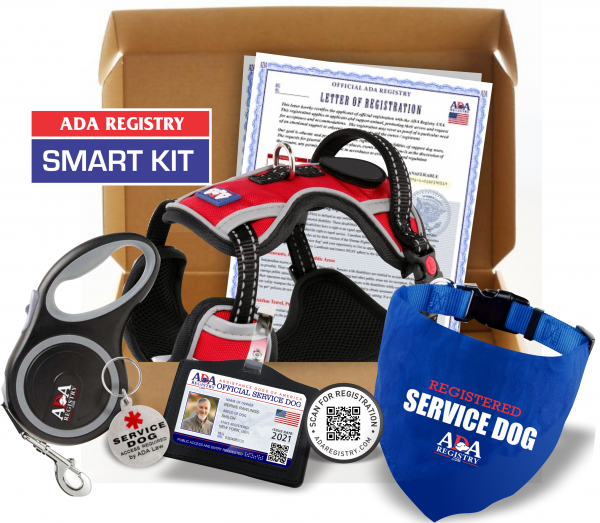
If you’re looking up where to register a dog in Delaware County, Oklahoma for an ESA, be cautious about confusing “registration” with legal protections. Many third-party “registries” sell certificates or IDs, but they are typically not required by law. For local government purposes, an ESA is still just a dog that must follow local ordinances (leash laws, nuisance rules, rabies vaccination, and any required licensing).
What to do if your landlord asks for information
If you’re requesting an accommodation, the correct approach is usually to follow the applicable housing process for reasonable accommodations and provide appropriate documentation if requested. Separately, keep your dog compliant with local rules (rabies vaccination and any city license tag requirements).
Frequently Asked Questions
Register A Dog In Other Oklahoma Counties
Select your county below to get started with your dog’s ID card. Requirements and license designs may vary by county, so choose your location to see the correct options and complete your pup’s registration.
- Adair County Dog Registration
- Alfalfa County Dog Registration
- Atoka County Dog Registration
- Beaver County Dog Registration
- Beckham County Dog Registration
- Blaine County Dog Registration
- Bryan County Dog Registration
- Caddo County Dog Registration
- Canadian County Dog Registration
- Carter County Dog Registration
- Cherokee County Dog Registration
- Choctaw County Dog Registration
- Cimarron County Dog Registration
- Cleveland County Dog Registration
- Coal County Dog Registration
- Comanche County Dog Registration
- Cotton County Dog Registration
- Craig County Dog Registration
- Creek County Dog Registration
- Custer County Dog Registration
- Dewey County Dog Registration
- Ellis County Dog Registration
- Garfield County Dog Registration
- Garvin County Dog Registration
- Grady County Dog Registration
- Grant County Dog Registration
- Greer County Dog Registration
- Harmon County Dog Registration
- Harper County Dog Registration
- Haskell County Dog Registration
- Hughes County Dog Registration
- Jackson County Dog Registration
- Jefferson County Dog Registration
- Johnston County Dog Registration
- Kay County Dog Registration
- Kingfisher County Dog Registration
- Kiowa County Dog Registration
- Latimer County Dog Registration
- LeFlore County Dog Registration
- Lincoln County Dog Registration
- Logan County Dog Registration
- Love County Dog Registration
- Major County Dog Registration
- Marshall County Dog Registration
- Mayes County Dog Registration
- McClain County Dog Registration
- McCurtain County Dog Registration
- McIntosh County Dog Registration
- Murray County Dog Registration
- Muskogee County Dog Registration
- Noble County Dog Registration
- Nowata County Dog Registration
- Okfuskee County Dog Registration
- Oklahoma County Dog Registration
- Okmulgee County Dog Registration
- Osage County Dog Registration
- Ottawa County Dog Registration
- Pawnee County Dog Registration
- Payne County Dog Registration
- Pittsburg County Dog Registration
- Pontotoc County Dog Registration
- Pottawatomie County Dog Registration
- Pushmataha County Dog Registration
- Roger Mills County Dog Registration
- Rogers County Dog Registration
- Seminole County Dog Registration
- Sequoyah County Dog Registration
- Stephens County Dog Registration
- Texas County Dog Registration
- Tillman County Dog Registration
- Wagoner County Dog Registration
- Washington County Dog Registration
- Washita County Dog Registration
- Woods County Dog Registration
- Woodward County Dog Registration